Conference Notes · ICML 2026 · Seoul
ICML 2026 in Seoul: the shift toward real-time, closed-loop, verifiable world models
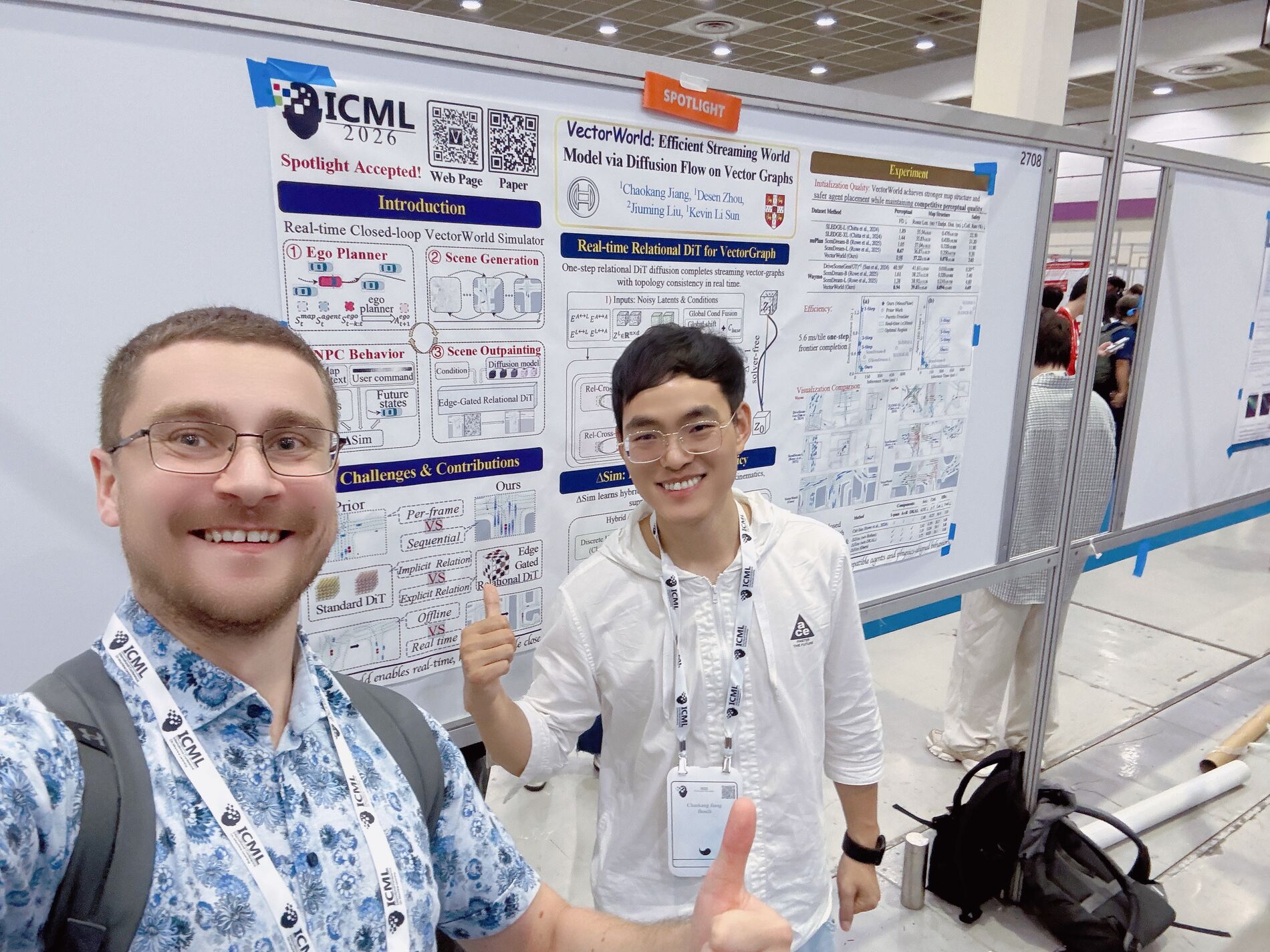
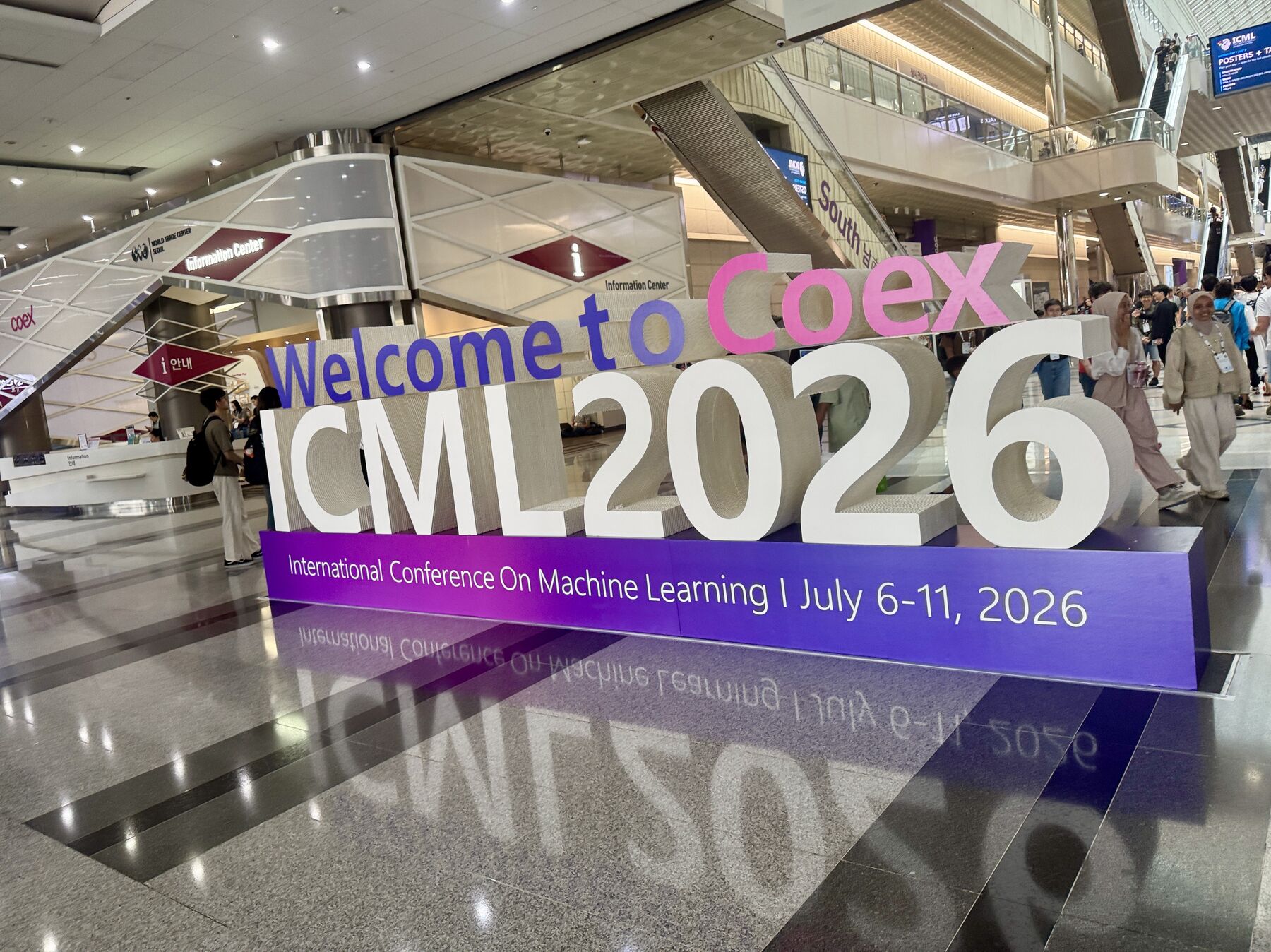
I spent July 6–11 at COEX for the 43rd ICML, showing our Spotlight paper, VectorWorld. Between poster sessions, the more interesting question was what generative models, world models, and ML systems are actually optimizing for now. The clearest answer: less for a better single sample, more for a system that is faster, steadier, easier to control, and easier to verify.
1. One-step generation becomes closed-loop infrastructure
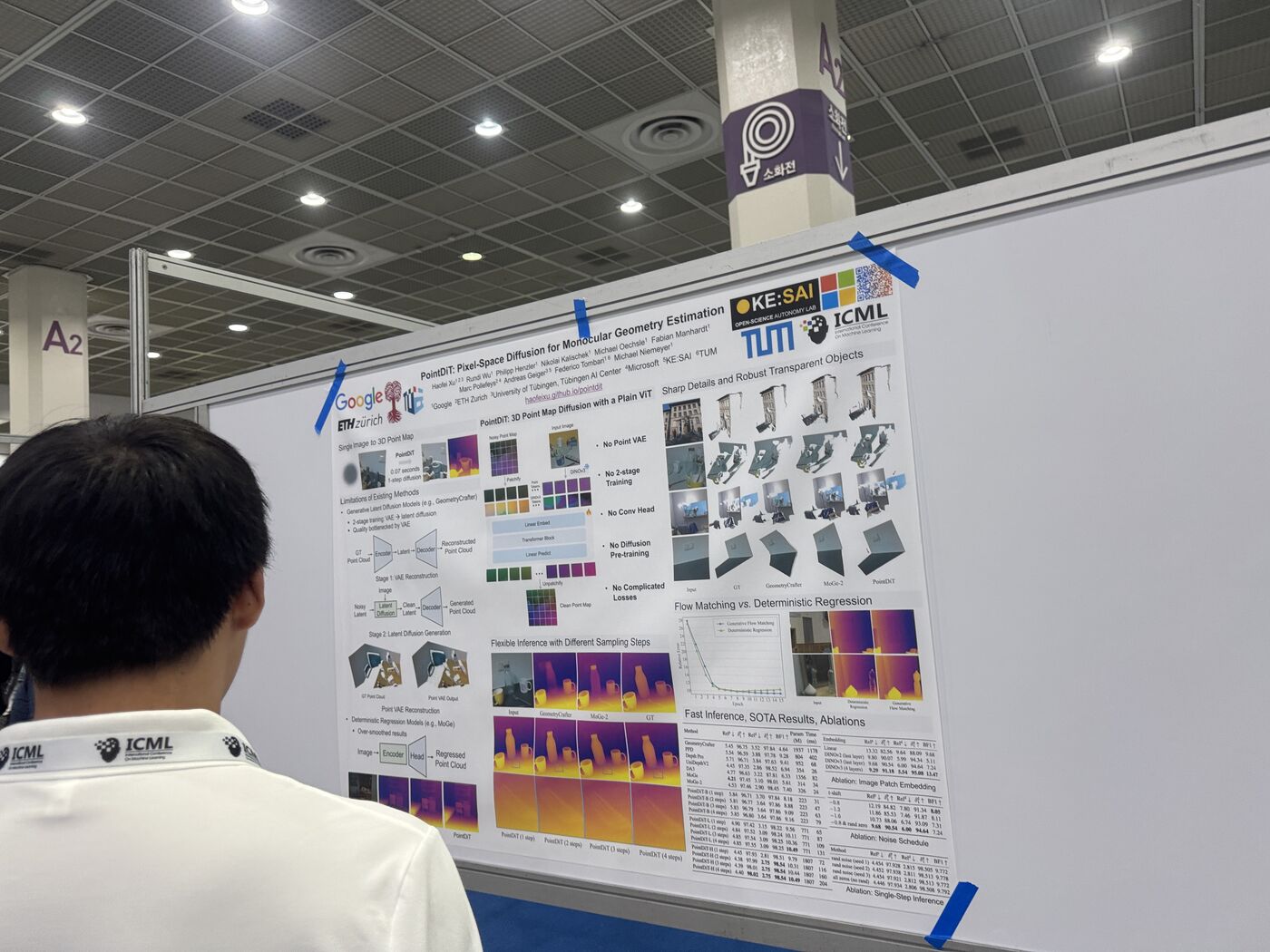
MeanFlow reframes the learning target from an instantaneous velocity to an average velocity over an interval, so a single forward pass replaces what used to take dozens of denoising steps — I covered that line of work in more depth in a paper-by-paper walkthrough. VectorWorld applies the same idea to streaming vector-scene completion: roughly 5.6 ms per tile for one-step inference, holding up over kilometer-scale closed-loop rollouts. PointDiT pushes the same one-step instinct into dense 3D geometry. Once a system runs closed-loop, latency stops being an engineering footnote — it becomes part of what the model can actually do.
2. Explicit structure still earns its keep
PointDiT skips the Point VAE and the usual two-stage latent pipeline entirely: a plain ViT runs pixel-space diffusion directly on raw 3D point-map patches, conditioned on DINOv3 features, and keeps sharper boundaries around ambiguous regions like transparent objects. VectorWorld makes the same bet at the scene level — an explicit lane-agent vector graph in place of a fully implicit visual latent. For geometry, traffic, and physical worlds, explicit structure is still one of the more reliable paths to controllability, interpretability, and verifiability.
3. Generation, reward, and evaluation have to be designed together
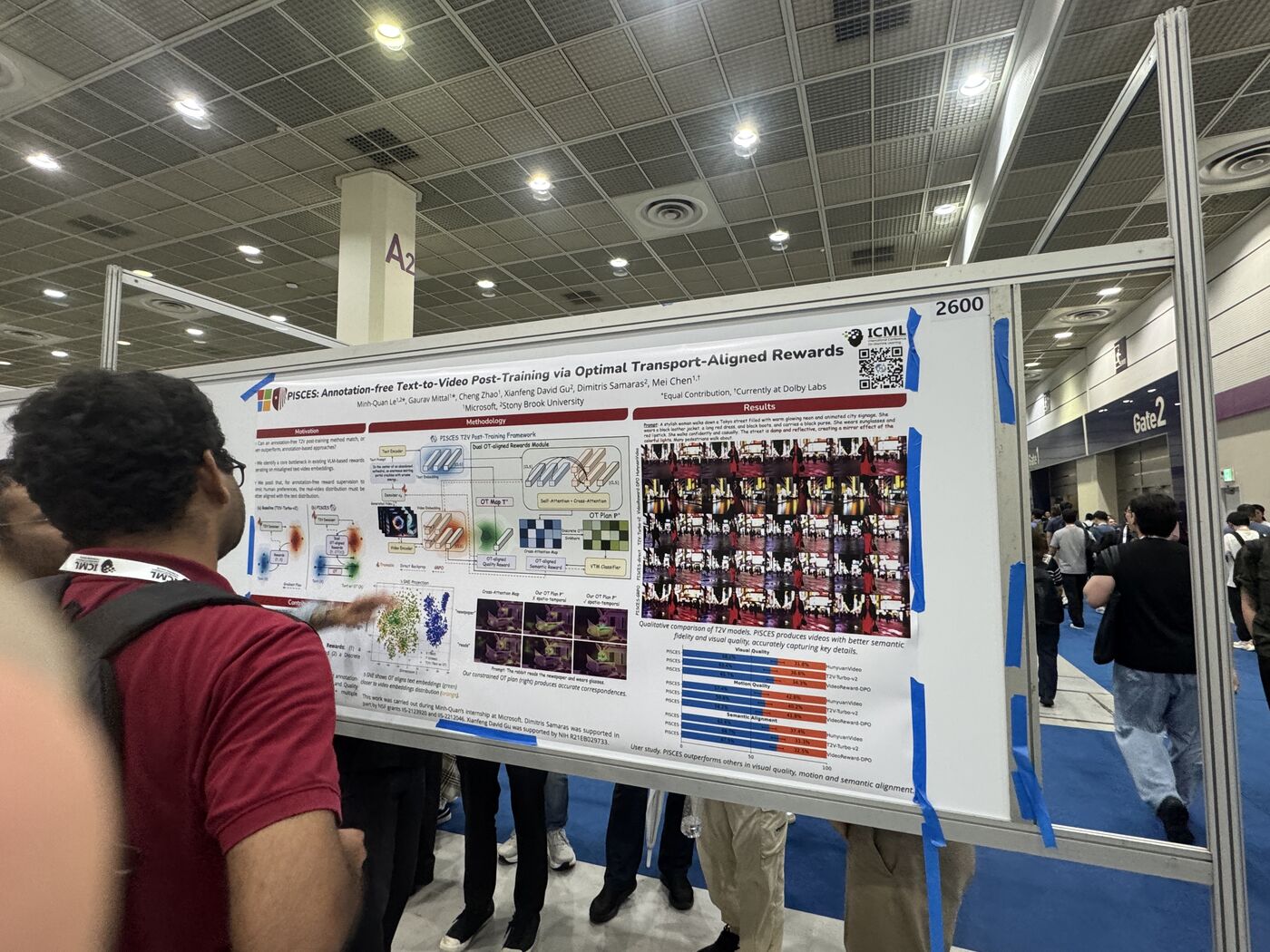
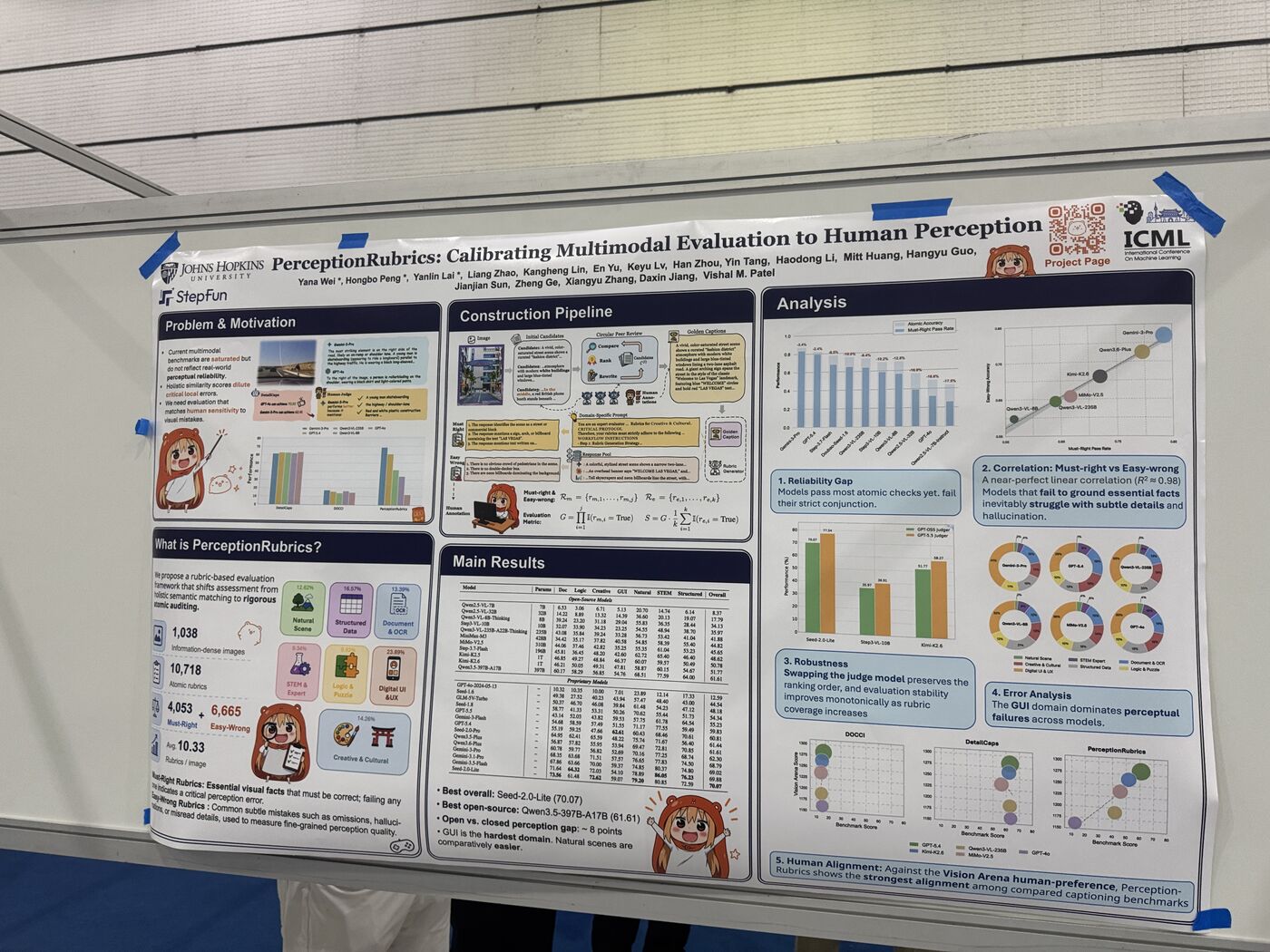
PISCES uses optimal transport to align text and video representations, then builds two separate rewards on that alignment — one for overall quality, one for fine-grained semantics — and post-trains video generation with no human preference labels at all. PerceptionRubrics does the equivalent for evaluation: it splits multimodal understanding into atomic "must-right" facts and "easy-wrong" details, then gates the score so one missed must-right fact can't be smoothed over by everything else being fine. The same instinct showed up outside vision-language work, too, in a medical-imaging poster (IPOD) that learns a reusable INR initialization for MRI reconstruction straight from undersampled k-space, with no clean reference scan in sight.
None of this is just "a bigger generator." Progress here depends as much on getting the reward and the rubric right as on making the generator itself bigger. For driving world models specifically, visual realism was never the bar — topology, collisions, feasible motion, and long-rollout drift deserve to be independent, hard checks, not folded into one aggregate score.
4. Control theory and generative models are converging again
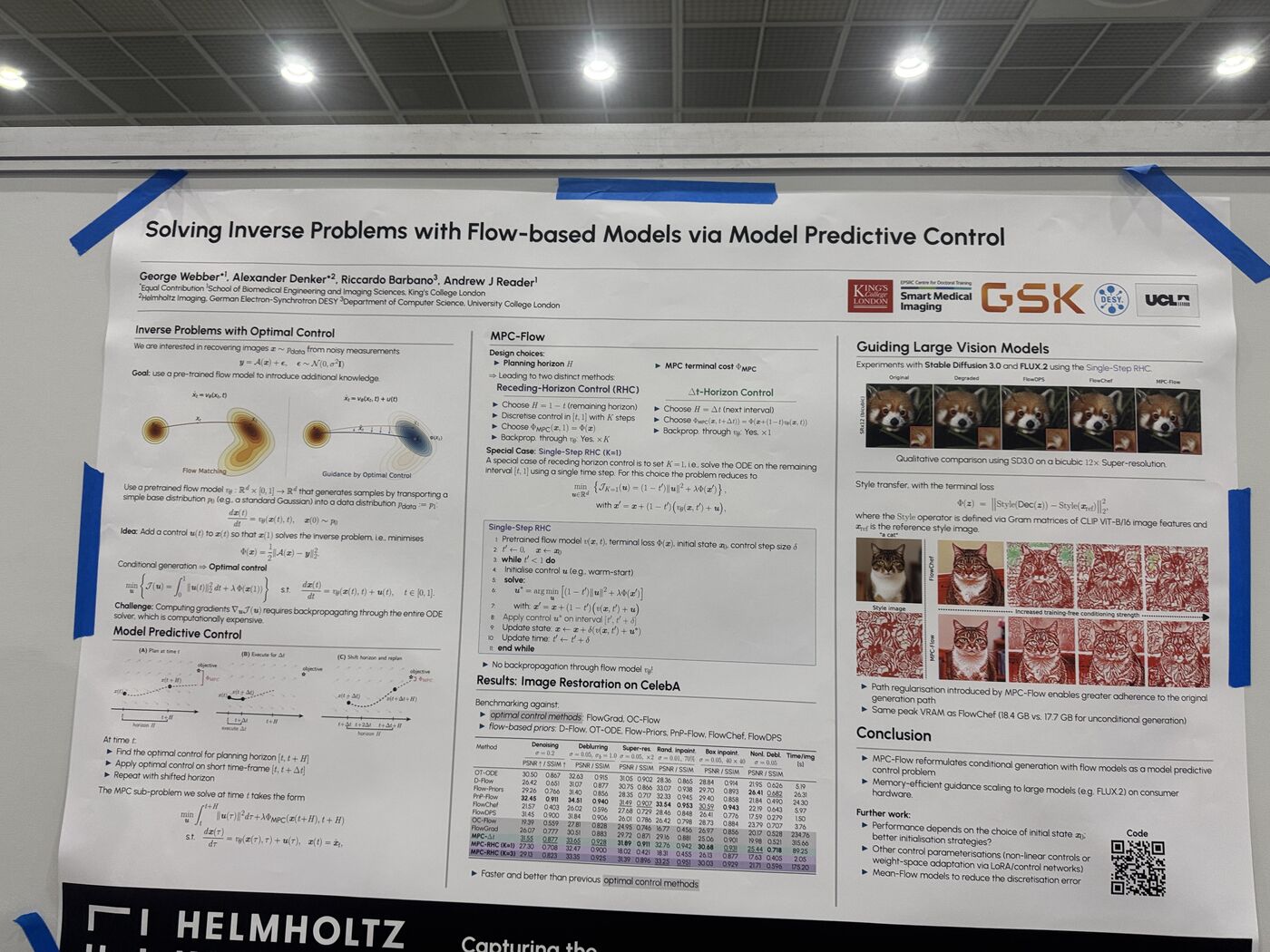
MPC-Flow reframes conditional generation with a flow model as a sequence of model-predictive-control sub-problems — plan over a short horizon, act, observe, replan — with no need to back-propagate through the full generative trajectory. VectorWorld's ΔSim leans on the same idea, constraining NPC behavior with differentiable kinematics to cut down physical drift over long closed loops. Learning and control were never really competing approaches: the generative model supplies the prior, and control plus physical constraints are what make that prior something you can deploy.
On the show floor
Five more posters that stuck with me — each one a different bet on the same shift.

5. The AI-scientist bottleneck isn't just code
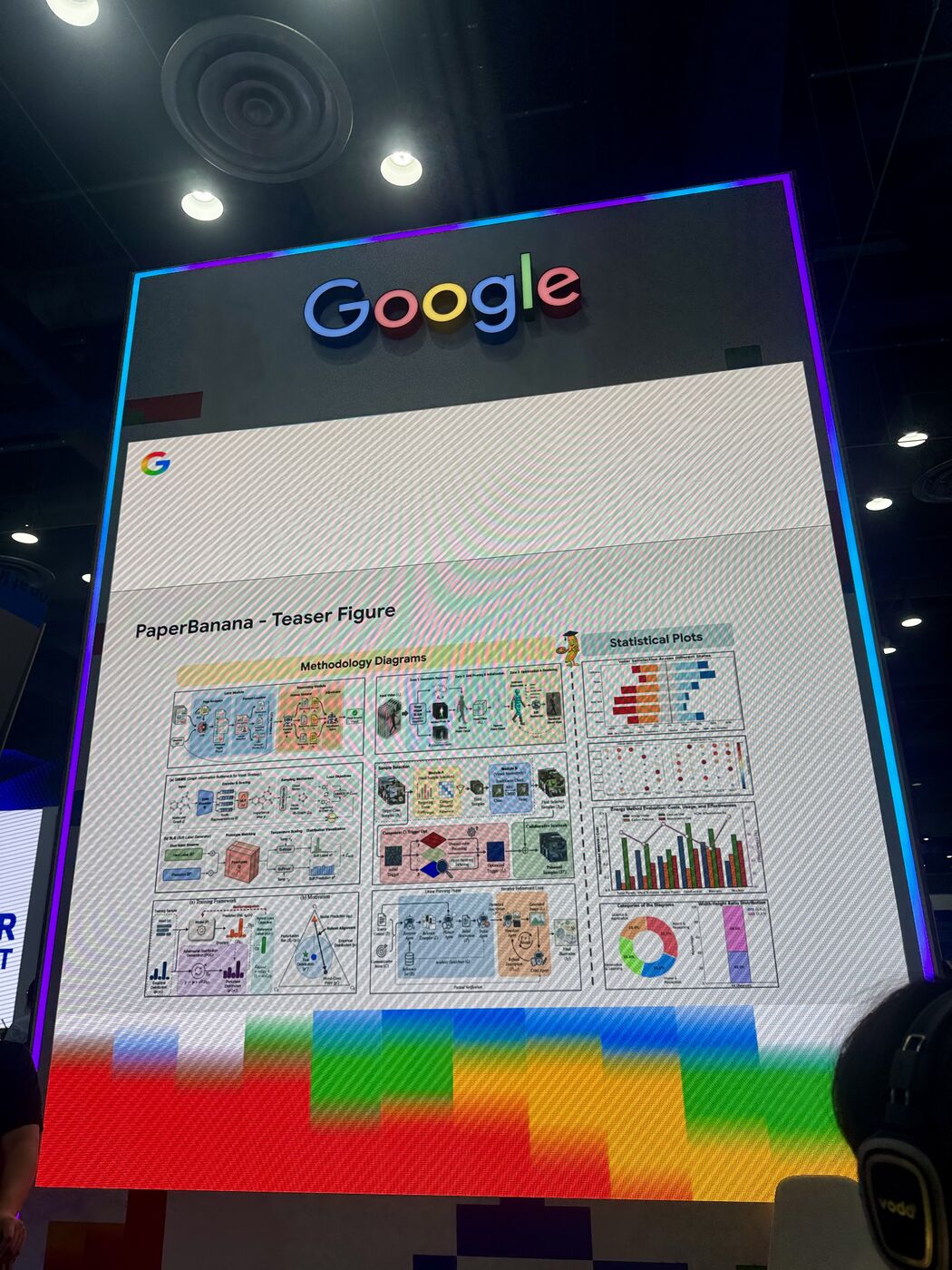
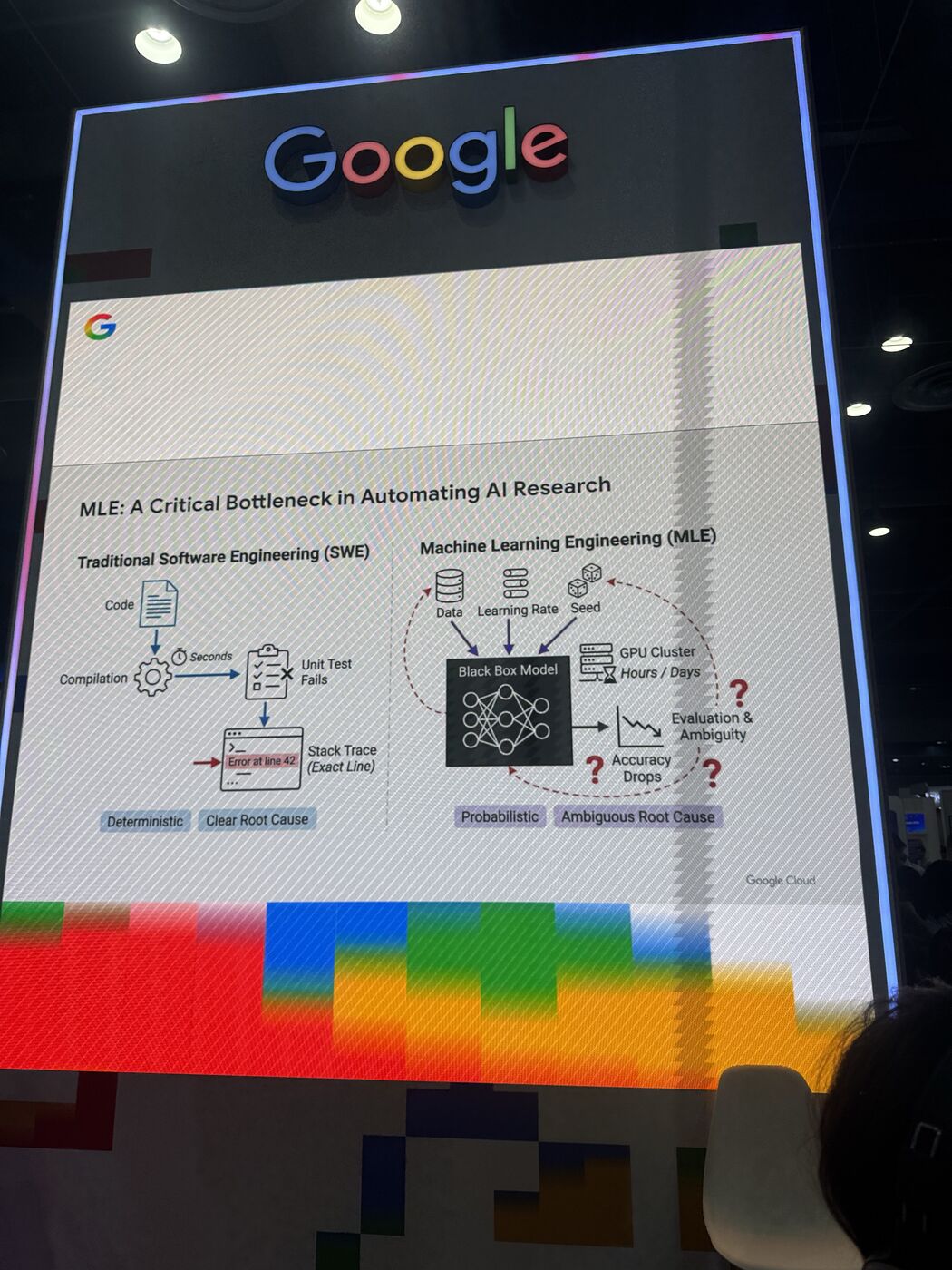
Google's PaperBanana — since renamed PaperVizAgent — turns five agents loose on one job: a retriever, a planner, a stylist, a renderer, and a critic, working together to draft and revise method figures and result plots. A companion Google poster, on why machine-learning engineering (MLE) is the harder half of automating research, made the sharper point: ordinary software fails loudly and reproduces in seconds, while a machine-learning experiment can take hours or days to fail, and the regression could be the data, a hyperparameter, the random seed, or the training run itself — the root cause is genuinely harder to pin down. MLE-STAR answers with web-search-seeded starting points and targeted, ablation-guided refinement of individual pipeline components, instead of rewriting the whole thing at once.
Automating research was never only about generating a plausible-looking method. It's whether you can run the experiment reliably, trace why performance actually moved, and keep the evidence to prove it.
The most striking demo on the floor
My own footage, from the MIRA booth: a real-time, four-player world model by General Intuition, Kyutai, and Epic Games, generating a driving game live from nothing but controller input — no engine, no renderer, just a model predicting what comes next, smoothly enough that you forget it is being generated at all. It was the clearest proof on the floor that "real-time, interactive world model" is no longer a future-tense claim.
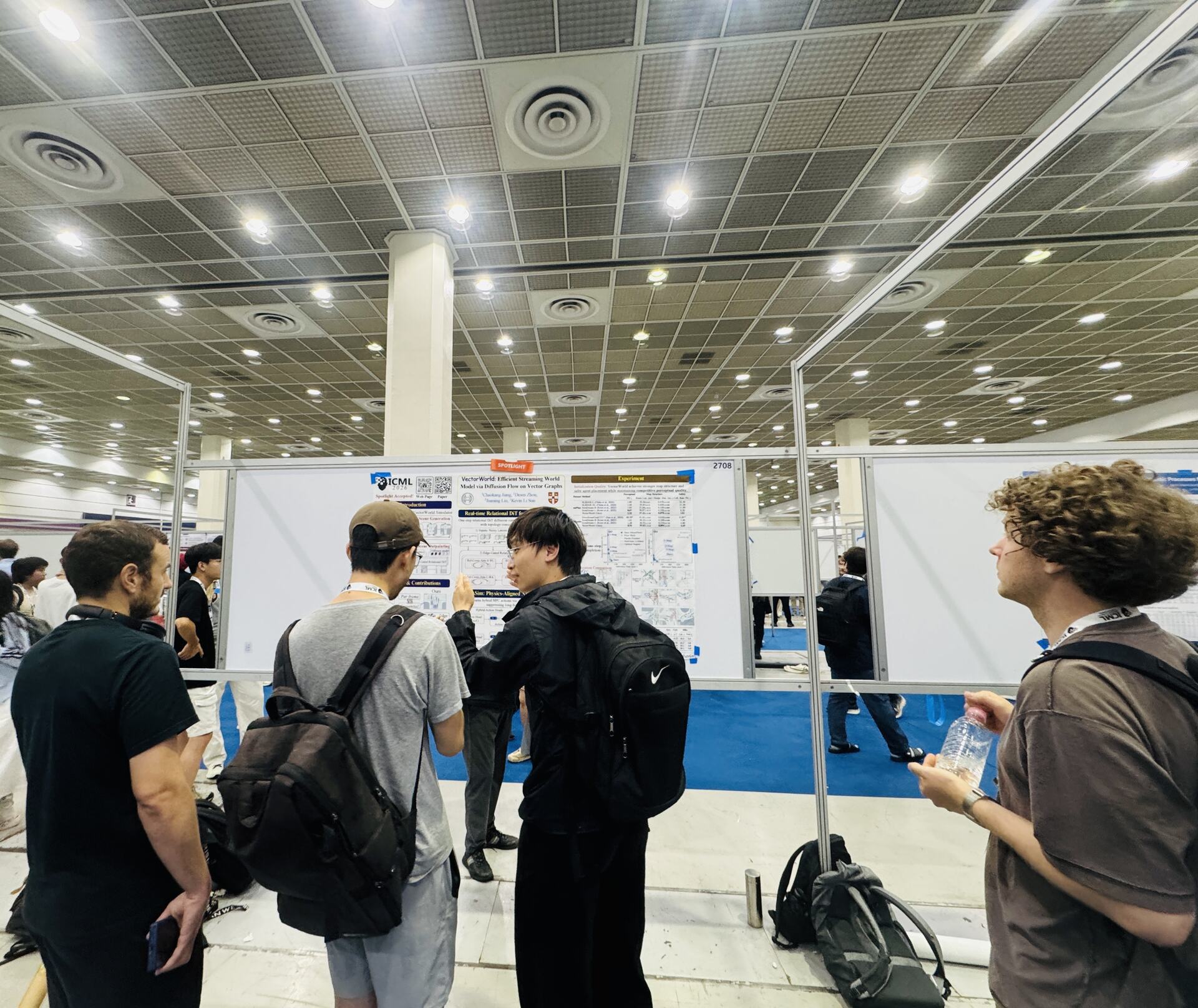
VectorWorld at the poster
The valuable part of a poster session was never finishing the walkthrough — it was explaining one system, in a few minutes, clearly enough that a stranger could restate what problem it solves, why it works, where its edges are, and how it might fail. In front of the VectorWorld poster, I kept boiling the system down to three steps:
History-compatible warm start → one-step frontier completion → physics-aligned closed loop
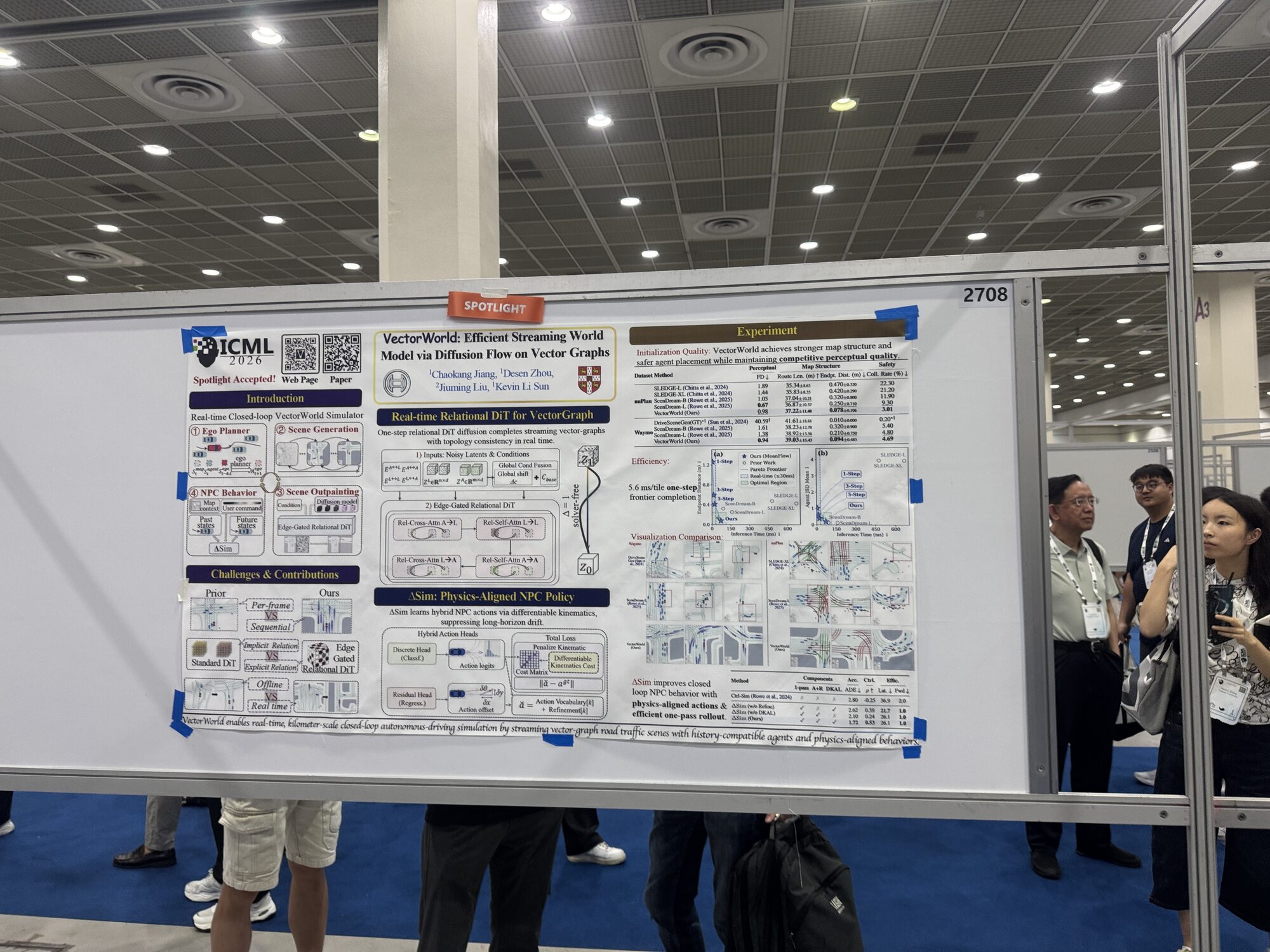
The conversations sharpened what I think a world model still has to answer before it earns a place in a production loop: a valid initialization, topological consistency, real-time inference, safe agent behavior, and stability over long rollouts.
One more lens: from least action to score and flow
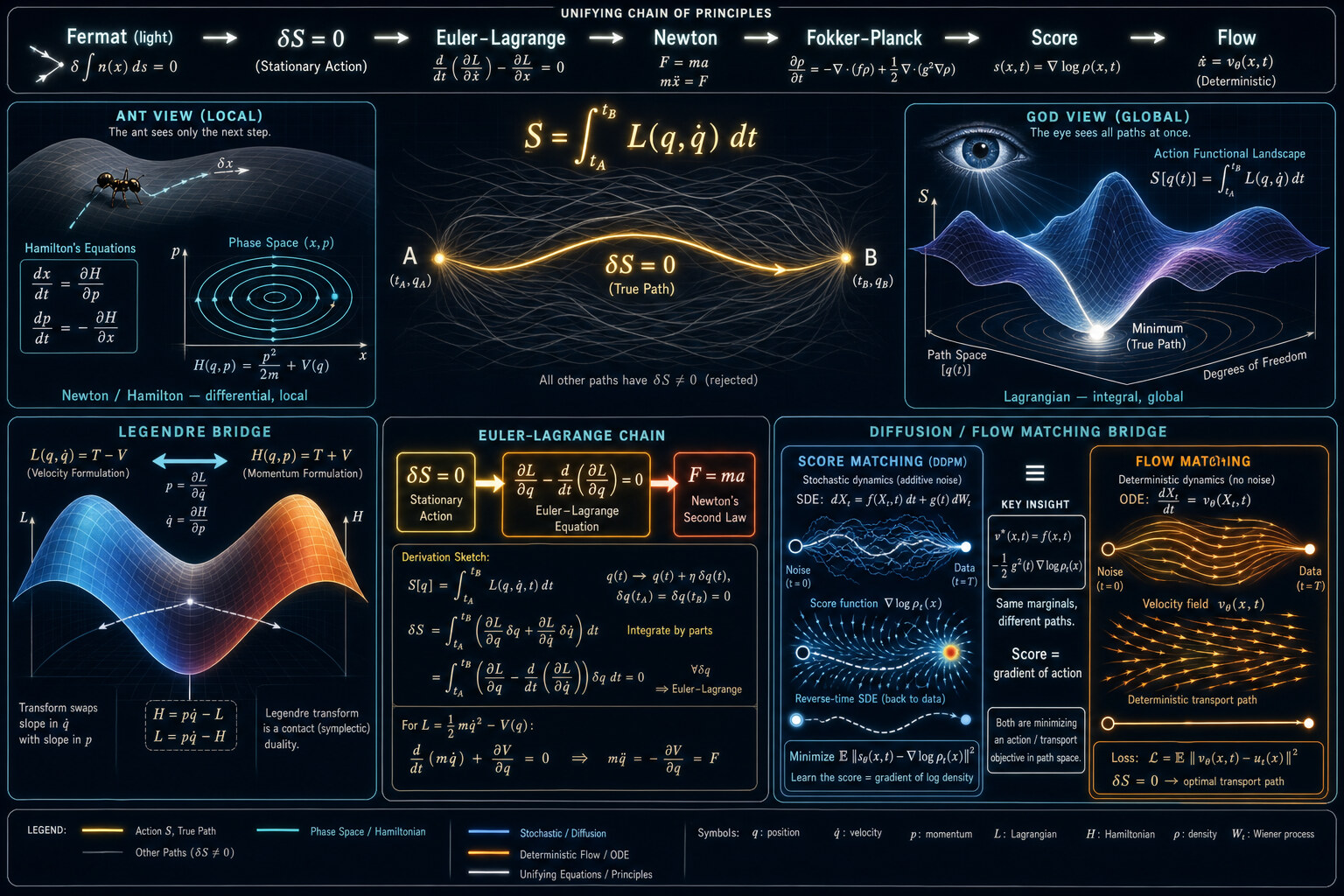
A personal aside I keep coming back to: classical mechanics, stochastic processes, score-based diffusion, and flow matching all read, in spirit, as the same question — what is the right evolution law over a space of paths.
Read the poster below as a conceptual throughline, not a rigorous derivation chain: a score model learns the gradient of a probability density, while flow matching learns a deterministic velocity field that transports noise to data directly. They rhyme more than they reduce to one another.
What I'm taking home
ICML 2026 mostly confirmed a direction I was already leaning toward:
- Move world models from offline generation toward real-time, interactive closed loops.
- Connect vector-world priors to sensor-level video generation.
- Build atomic evaluation for structure, physics, and safety — not just an aggregate visual score.
- Automate the experiment loop, but keep the evidence, the reproduction steps, and a human check at the end of it.
Bigger models still matter. But what actually moves a system forward is a shorter generation path, more explicit structure, a more reliable closed loop, and stricter verification.